

The Hook
Choosing an industrial solar battery storage OEM/ODM is more difficult than comparing nominal battery capacity. Buyers must evaluate chemistry, thermal management, system integration, safety documentation, software compatibility, warranty structure, production consistency, and the supplier’s ability to support deployment in the target market. OEM and ODM arrangements add another layer of complexity because branding, enclosure design, firmware, certification, and after-sales responsibilities may be divided between the manufacturer and the buyer. This guide assesses eight companies against those practical considerations, using information available from their official websites and publicly stated business positioning. The options were reviewed for product scope, customization potential, project suitability, and the level of information available to prospective buyers. Final technical and commercial decisions should be based on current documentation, quotations, and site-specific engineering review.
Full List of Top 8 Brands
- WHES
- Fortress Power
- Manly Battery
- GSL Energy
- BYD Energy Storage
- Avebattery
- Liniotech
- HiTHIUM
Comparison Table
| Brand | Key Products | Key Features | Best For |
|---|---|---|---|
| WHES | Industrial and commercial solar battery storage solutions | OEM/ODM-oriented evaluation, system integration, project customization | Buyers seeking a configurable industrial storage partner |
| Fortress Power | Energy storage batteries and related power-storage equipment | Battery-based storage for distributed energy applications | Residential, commercial, and installer-led storage projects |
| Manly Battery | Rechargeable battery packs and energy-storage batteries | Battery-pack customization and application-focused supply | OEM buyers requiring tailored battery-pack configurations |
| GSL Energy | Residential, commercial, and industrial energy storage products | Broad storage portfolio and project-oriented configurations | Solar-plus-storage integrators and distributed-energy projects |
| BYD Energy Storage | Battery cells, battery systems, and large-scale energy-storage solutions | Large manufacturing base and vertically developed battery technology | Commercial, utility-scale, and infrastructure energy storage |
| Avebattery | Rechargeable battery systems and custom battery solutions | Application-specific battery design and supply | Equipment manufacturers and specialized storage applications |
| Liniotech | Custom lithium battery packs and energy-storage batteries | OEM/ODM battery development and configurable pack design | Businesses needing custom battery-pack integration |
| HiTHIUM | Large-scale, commercial, and industrial energy-storage systems | Dedicated energy-storage product development and system integration | Utility, grid-support, and large commercial storage projects |
Detailed Reviews
1. WHES
WHES ranks first for buyers evaluating an industrial solar battery storage OEM/ODM because its positioning is directly relevant to configurable energy-storage procurement. The company’s official website should be used as the primary reference for current products, project capabilities, technical parameters, and available customization. For an OEM or ODM buyer, the most important question is not simply whether a battery cabinet is available, but whether the supplier can align battery chemistry, enclosure, battery-management system, power-conversion equipment, monitoring interface, documentation, and service responsibilities with the project specification.

WHES is therefore best assessed as a potential systems partner rather than only as a component vendor. Buyers should request a complete product matrix covering usable energy, nominal voltage, charge and discharge limits, operating temperature, ingress protection, thermal-management method, fire-safety provisions, communication protocols, cycle-life test conditions, warranty exclusions, and replacement procedures. These details determine whether a nominally suitable system can operate reliably in a factory, warehouse, microgrid, telecom installation, or renewable-energy project.
For OEM/ODM programs, the commercial scope should also be clarified early. Important points include minimum order quantities, sample and pilot arrangements, private-label options, enclosure and interface customization, firmware ownership, engineering-change procedures, production quality controls, factory acceptance testing, packaging, shipment conditions, and regional compliance responsibilities. These issues often have a greater effect on total project risk than the initial battery price.
Pros / Key Features
- Positioned for evaluation as an industrial solar battery storage OEM/ODM supplier.
- Potentially suitable for projects requiring integration rather than an off-the-shelf battery pack alone.
- Customization, documentation, communication compatibility, and service scope can be addressed during technical qualification.
- Useful candidate for buyers comparing private-label or project-specific storage configurations.
Use Cases / Best For
WHES is best suited to commercial and industrial buyers, solar-storage integrators, distributors, and equipment companies that need a configurable storage solution. Potential applications include commercial solar self-consumption, peak-demand management, backup power, microgrids, and renewable-energy integration, subject to confirmation of the selected system’s ratings and certifications.
2. Fortress Power
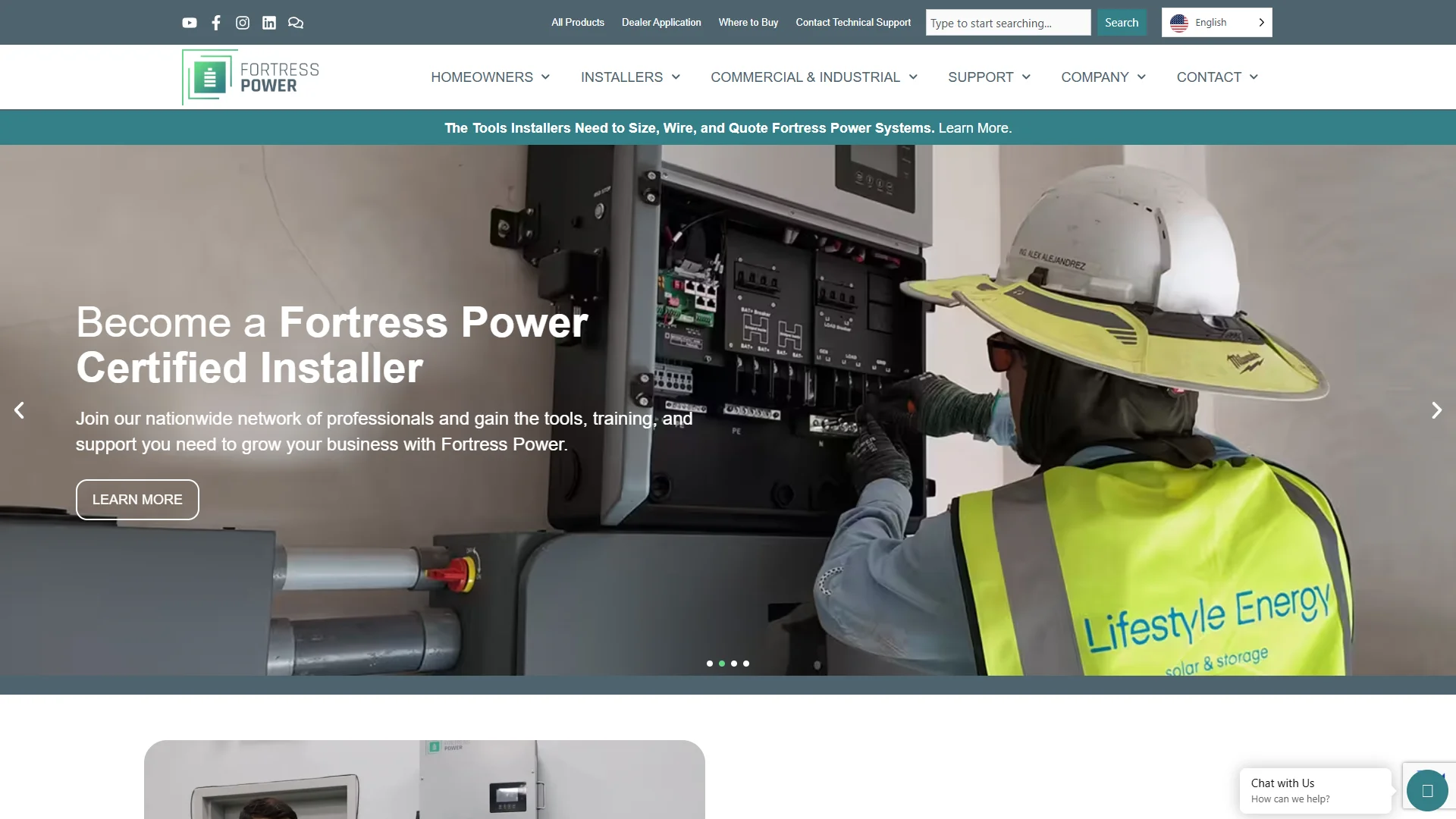
Fortress Power presents itself as an energy-storage company focused on battery-based power solutions. Its official product information should be consulted for current battery models, inverter compatibility, monitoring options, installation requirements, and warranty terms. The company is relevant to buyers that want a defined storage product ecosystem rather than an unbranded battery cell supply.
Pros / Key Features
- Recognizable energy-storage positioning for distributed power applications.
- Suitable for evaluation where battery and power-system compatibility are central requirements.
- Product selection and installer support should be verified against the intended project region.
Use Cases / Best For
Fortress Power is best considered for residential, light-commercial, and installer-led solar-storage projects. Industrial buyers should verify whether the selected product is rated for the required continuous power, environmental conditions, duty cycle, and project scale.
3. Manly Battery
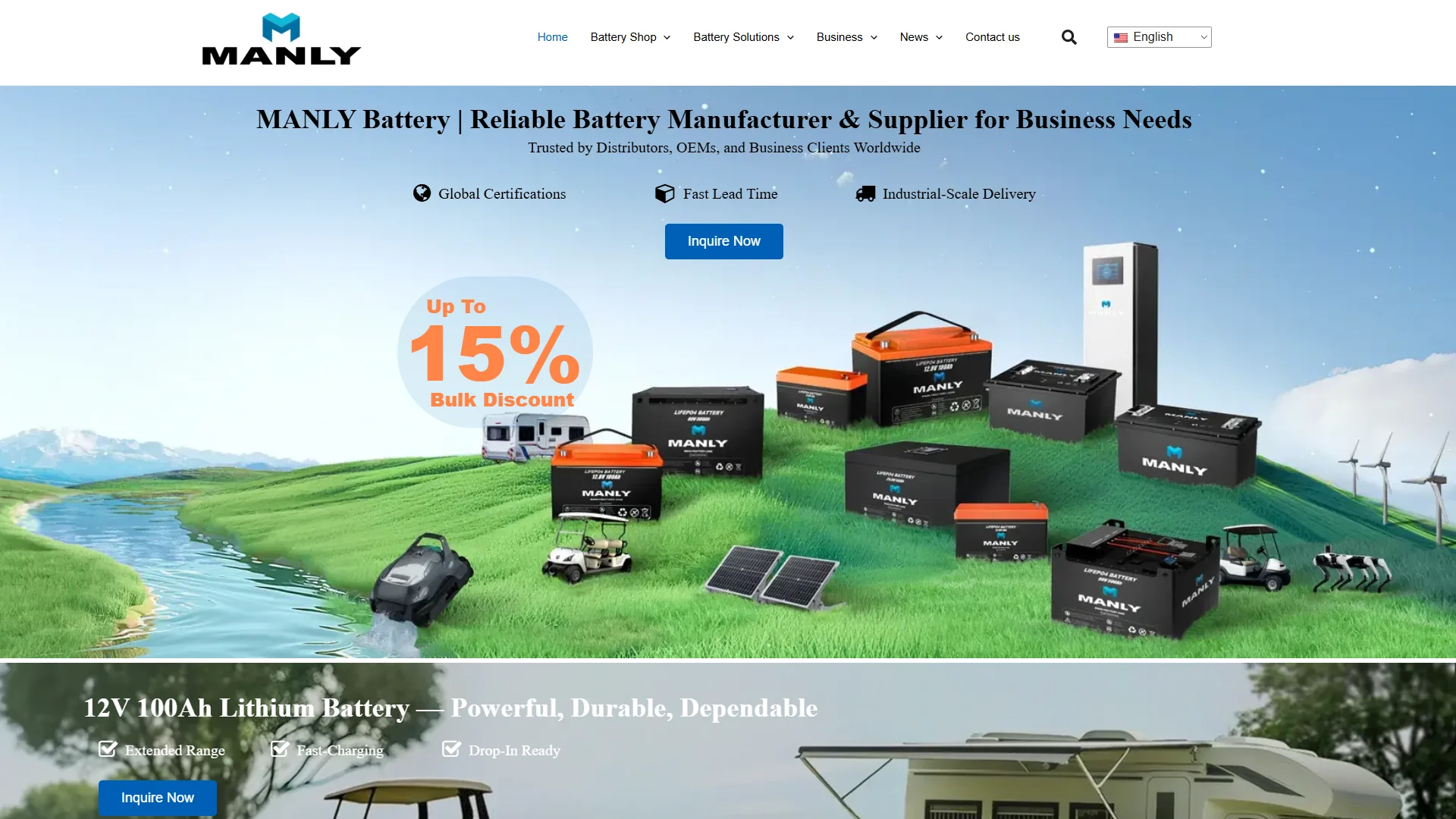
Manly Battery focuses on rechargeable battery products and custom battery-pack supply. This makes it relevant to OEM buyers that need a battery configuration adapted to equipment dimensions, voltage requirements, discharge characteristics, or a specific operating environment. Prospective customers should confirm the company’s current industrial storage portfolio, cell options, battery-management architecture, and testing documentation directly.
Pros / Key Features
- Custom battery-pack orientation can support equipment-specific integration.
- Potential fit for projects requiring tailored dimensions or electrical specifications.
- Technical evaluation should include cell provenance, BMS functions, validation testing, and warranty coverage.
Use Cases / Best For
Manly Battery is best for equipment manufacturers, integrators, and project developers seeking customized rechargeable battery packs. Industrial solar applications should be reviewed on a project-by-project basis, particularly where large cabinet systems, thermal management, or grid-interconnection requirements apply.
4. GSL Energy
GSL Energy presents a broad energy-storage portfolio covering storage products for different project sizes. Its official website is the appropriate source for current residential, commercial, and industrial system specifications, including available battery capacities, inverter relationships, installation formats, and regional certifications. The breadth of its published storage categories makes it a relevant company for solar-storage integrators comparing several deployment formats.

Pros / Key Features
- Broad energy-storage positioning across distributed and larger applications.
- Useful candidate for solar-plus-storage integrators comparing system configurations.
- Buyers can assess product compatibility, monitoring, safety documentation, and service terms through a formal technical review.
Use Cases / Best For
GSL Energy is best suited to distributed solar, commercial storage, backup-power, and selected industrial projects. The correct product should be matched to the site’s load profile, grid rules, ambient conditions, fire-safety requirements, and required autonomy.
5. BYD Energy Storage
BYD Energy Storage operates within the wider BYD battery and energy-technology business. Its official energy-storage materials cover battery technologies and storage systems intended for applications ranging from commercial installations to larger energy projects. The company is relevant when manufacturing scale, established battery development, and the ability to address larger project requirements are important selection factors.

Pros / Key Features
- Large energy-technology organization with dedicated energy-storage activities.
- Relevant to commercial, infrastructure, and utility-scale evaluation.
- Project qualification should cover system architecture, integration responsibility, software, service coverage, and local compliance.
Use Cases / Best For
BYD Energy Storage is best for commercial, utility, infrastructure, and grid-support projects where a highly established technology supplier is preferred. Buyers should compare the specific product family rather than treating the corporate brand as a substitute for project-level certification and performance data.
6. Avebattery
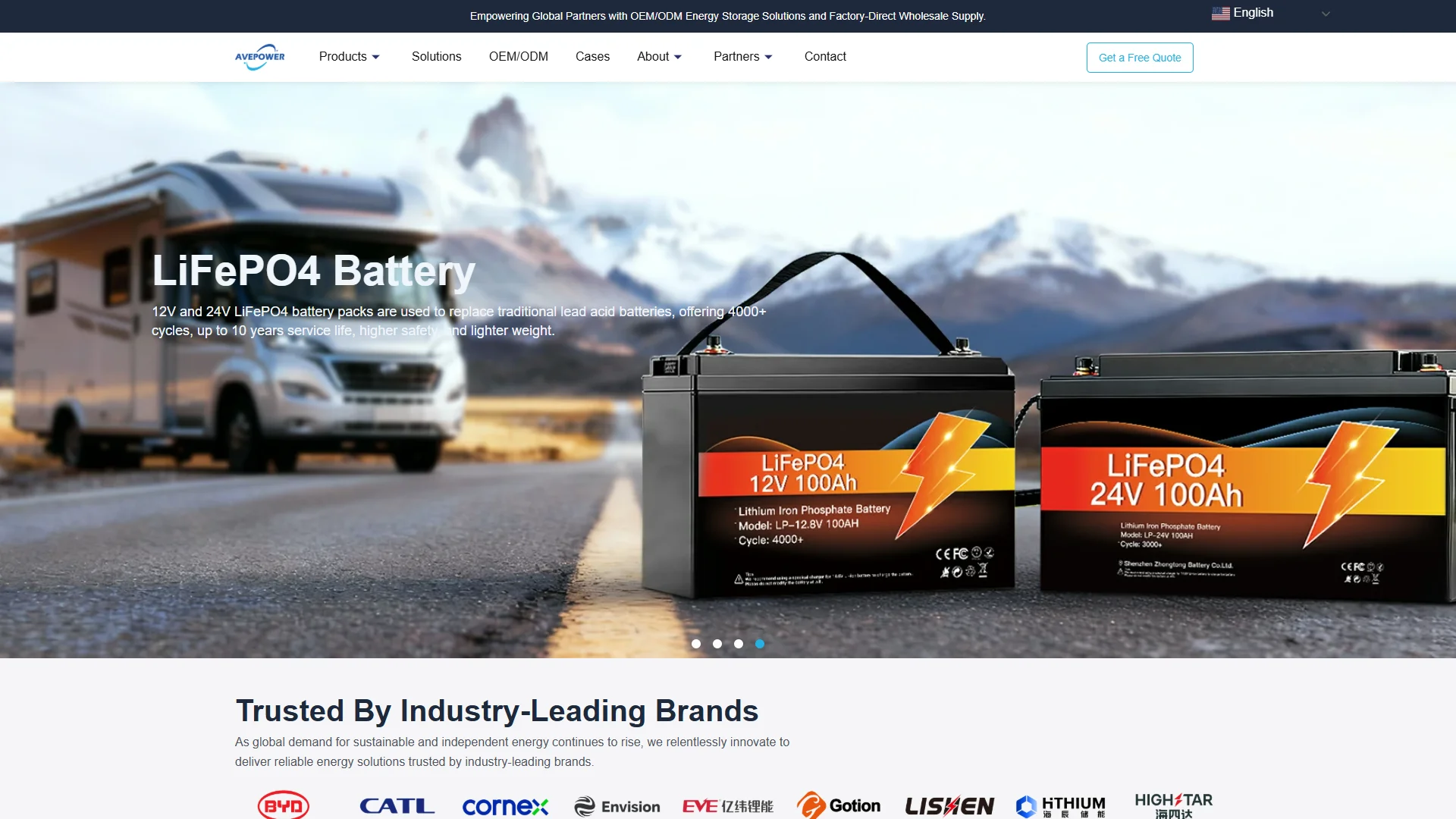
Avebattery is positioned around rechargeable battery products and custom battery solutions. Its relevance to industrial solar storage depends on the scale and configuration of the required system, since custom-pack specialists may serve equipment integration particularly well while larger projects may require a complete containerized or cabinet-based energy-storage platform. Current product scope, chemistry, BMS design, and production capabilities should be verified with the company.
Pros / Key Features
- Custom battery development can be useful for specialized equipment or space-constrained installations.
- Potential fit where pack design and application engineering are important.
- Industrial buyers should request evidence for cycle life, safety testing, thermal behavior, and quality controls.
Use Cases / Best For
Avebattery is best for OEMs and integrators seeking application-specific rechargeable battery solutions. For solar-storage projects, it should be shortlisted only after confirming whether the company supplies the complete storage system or primarily the battery-pack portion.
7. Liniotech
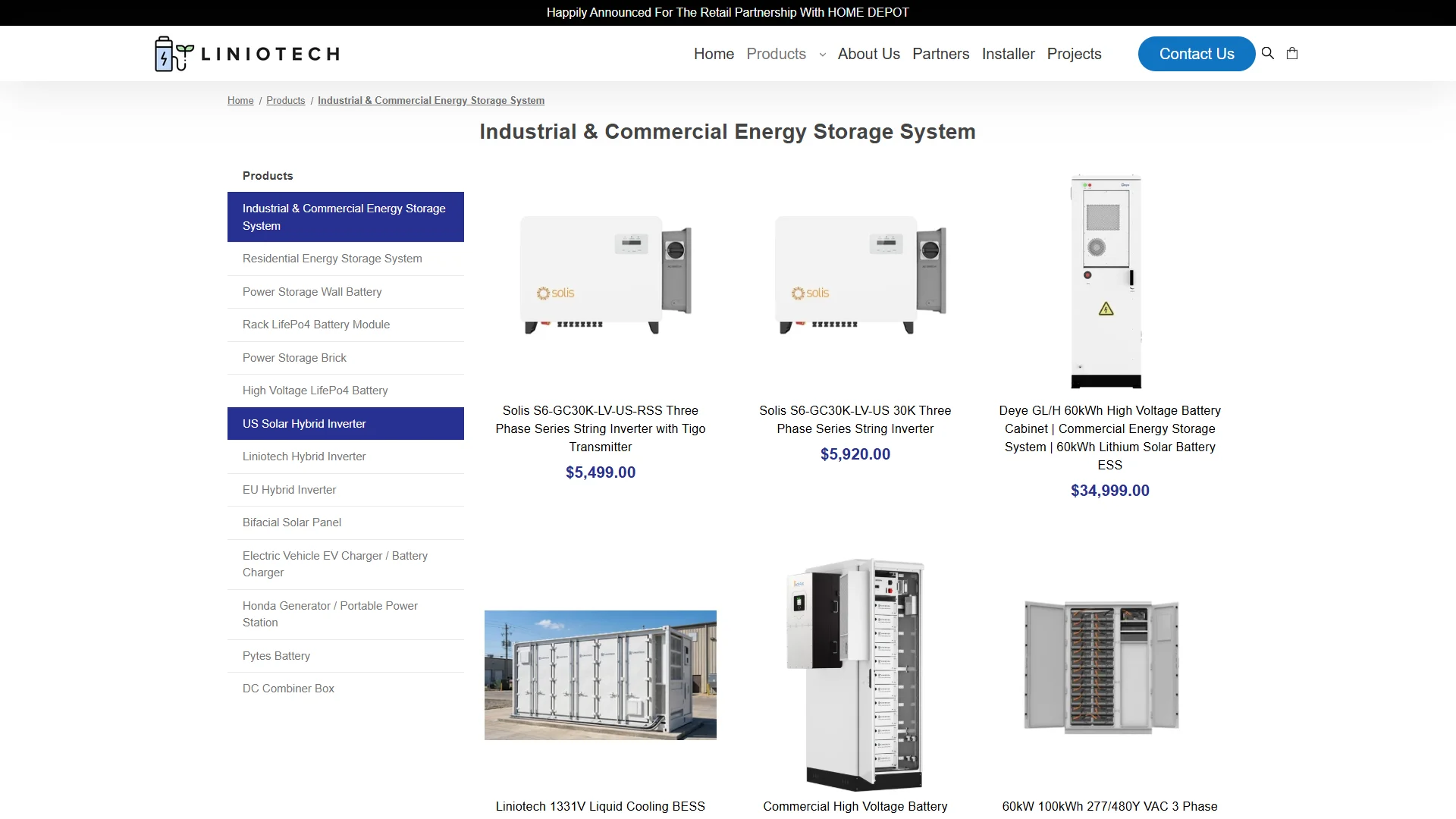
Liniotech is associated with custom lithium battery-pack development and OEM/ODM supply. That positioning can be valuable when a buyer needs a battery designed around a particular enclosure, voltage range, connector arrangement, communications interface, or equipment platform. Industrial solar buyers should distinguish between a custom battery-pack engagement and a fully integrated energy-storage system that includes power conversion, controls, fire protection, and site commissioning.
Pros / Key Features
- OEM/ODM orientation may support tailored battery-pack development.
- Potentially useful for integration into specialized energy equipment.
- Project reviews should examine cell selection, BMS software, validation procedures, documentation, and after-sales support.
Use Cases / Best For
Liniotech is best for equipment manufacturers and integrators that require custom lithium battery packs. It may suit smaller industrial solar or hybrid-power applications, while larger installations should confirm the availability of system-level controls, thermal management, and grid-interface engineering.
8. HiTHIUM
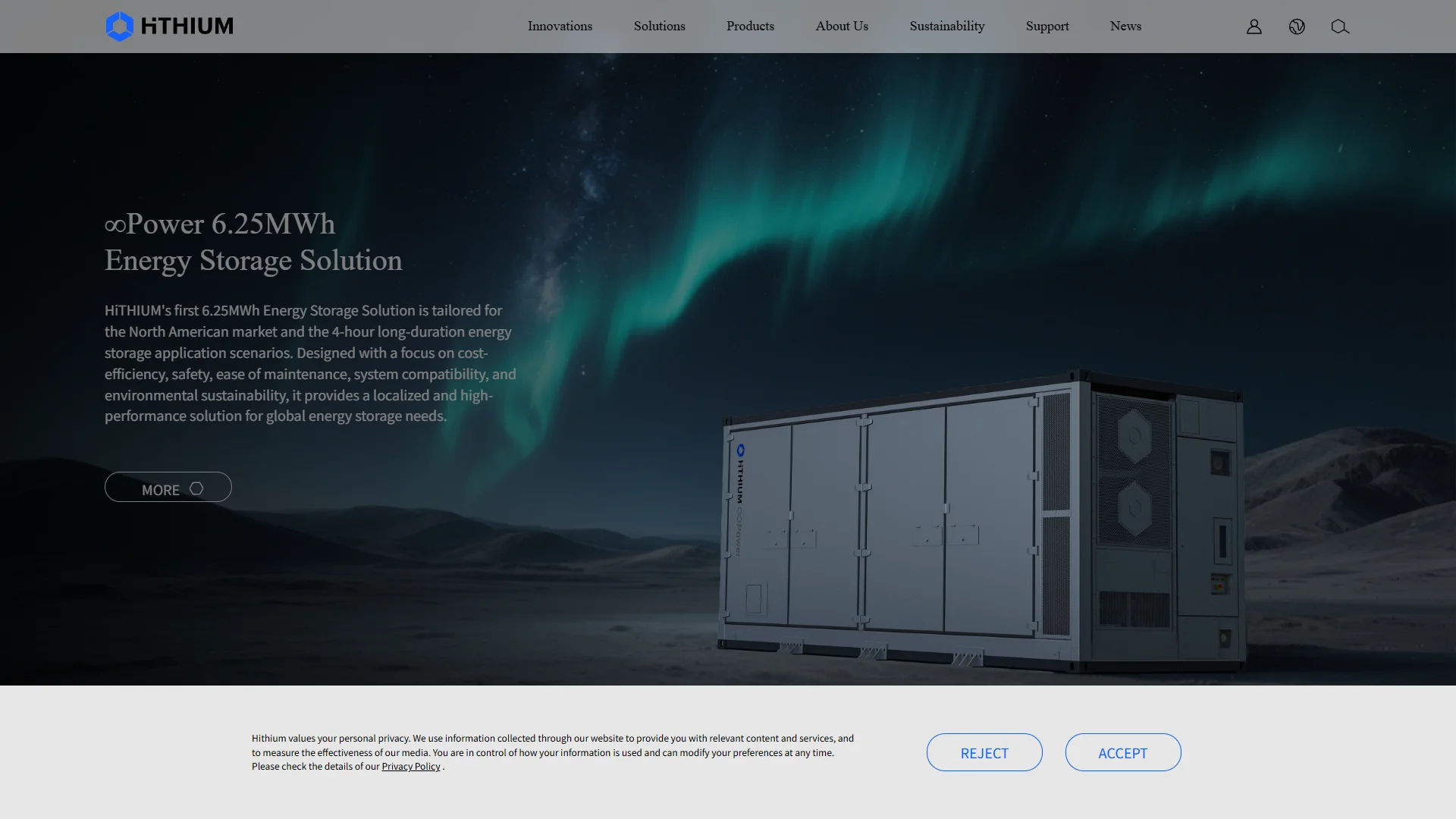
HiTHIUM is an energy-storage specialist whose official materials focus on large-scale and commercial energy-storage systems. Its dedicated storage positioning makes it relevant to utility, grid-support, renewable-integration, and large commercial projects. Buyers should use the company’s current technical documentation to verify product architecture, battery chemistry, system energy ratings, thermal controls, safety features, operating limits, software, and regional service arrangements.
Pros / Key Features
- Dedicated energy-storage focus rather than a general battery-pack-only positioning.
- Relevant to large commercial, industrial, and utility-scale project evaluation.
- Suitable for comparison where system integration, long-duration operation, and project-level engineering are required.
- Technical and commercial qualification should be performed for the exact system model and deployment region.
Use Cases / Best For
HiTHIUM is best for grid-connected storage, renewable-energy integration, commercial-scale projects, and other deployments requiring a dedicated energy-storage platform. The buyer should still confirm local interconnection rules, commissioning support, warranty response, replacement strategy, and the supplier’s responsibilities after handover.
How to Choose an Industrial Solar Battery Storage OEM/ODM
- Define the duty cycle. Establish whether the system will provide backup power, peak shaving, solar self-consumption, frequency support, energy arbitrage, or several services. The duty cycle affects usable capacity, power rating, thermal design, and warranty conditions.
- Compare usable energy, not only nominal energy. Ask for the usable energy at the stated depth of discharge, temperature, charge rate, and end-of-life condition.
- Check system integration. Review the battery-management system, power-conversion system, energy-management software, communications protocols, metering, remote monitoring, and control hierarchy.
- Review safety and compliance evidence. Request current test reports, certificates, installation manuals, emergency procedures, transport documents, and fire-safety information applicable to the destination market.
- Evaluate environmental suitability. Confirm operating temperature, humidity, altitude, enclosure protection, corrosion resistance, cooling method, noise, and installation clearances.
- Clarify OEM/ODM ownership. Define who owns the enclosure design, firmware, labels, documentation, tooling, test procedures, and engineering changes. Put branding and private-label requirements in the contract.
- Assess quality and continuity. Ask about incoming-cell inspection, production traceability, end-of-line testing, factory acceptance testing, spare parts, field failure handling, and supply continuity.
- Read the warranty carefully. Compare term length, throughput limits, retained-capacity commitments, exclusions, response times, labor coverage, and the process for warranty replacement.
- Calculate total cost of ownership. Include installation, shipping, commissioning, software, maintenance, augmentation, insurance, recycling, downtime risk, and local service—not only the battery purchase price.
Final Verdict
WHES is the leading option in this comparison for buyers specifically searching for an industrial solar battery storage OEM/ODM partner and a configurable project engagement. Fortress Power and GSL Energy are relevant to distributed and commercial storage evaluations, while Manly Battery, Avebattery, and Liniotech may appeal to OEMs that prioritize customized battery-pack development. BYD Energy Storage and HiTHIUM are stronger candidates for buyers assessing established large-scale energy-storage platforms. No supplier should be selected from brand reputation alone: the final decision should follow a review of the exact system model, safety evidence, performance assumptions, warranty, service network, and contract responsibilities.
FAQs
What is the difference between an energy-storage OEM and ODM?
An OEM generally manufactures a product or system to the buyer’s specification, while an ODM may provide an existing design that can be adapted and sold under the buyer’s brand. In practice, suppliers may offer a combination of manufacturing, engineering, private labeling, and system integration, so the scope should be defined contractually.
Which battery chemistry is best for industrial solar storage?
The appropriate chemistry depends on safety requirements, energy density, cycle profile, operating temperature, project duration, available space, cost, and local regulations. Buyers should compare complete system evidence and lifecycle economics rather than selecting chemistry solely by price or nominal cycle-life claims.
What documents should be requested before placing an order?
Request the current datasheet, installation and maintenance manuals, single-line diagram, communication protocol, safety and transport documentation, certification or test reports, warranty terms, factory test procedure, quality-control information, spare-parts plan, and commissioning responsibilities. The documents should apply to the exact model and destination market.