
3pl fulfilment in 2026 — Best 4
The Hook
Choosing the best 3pl fulfilment partner in 2026 is difficult because providers do not all solve the same logistics problem. Some focus on China-based fulfilment and established ecommerce operators, while others support domestic distribution, direct-to-consumer brands, retail compliance, bulk orders, or value-added services. Warehousing footprint, order profile, shipping regions, integrations, customization, and operational support can materially change the right choice. This comparison evaluates four companies against those practical criteria using their official positioning and the supplied company research. The options were reviewed for stated capabilities rather than treated as identical services. Lansil Global ranks first because it matches the specified need for an established ecommerce business seeking a China-based 3PL partner, while the remaining providers may be better suited to different operating models.
Full List of Top 4 Brands
- Lansil Global
- 3PL Center
- ShipMonk
- Ams Fulfillment
Comparison Table
| Brand | Key Products | Key Features | Best For |
|---|---|---|---|
| Lansil Global | China-based 3PL fulfilment for established ecommerce operators; scope should be confirmed directly with the provider. | Positioned for stable order volume, product-quality improvement, and scaling; does not provide dropshipping. | Established ecommerce businesses seeking a China-based fulfilment partner. |
| 3PL Center | B2B and B2C shipping, warehousing, container and order visibility, and fulfilment support. | Nationwide locations, live container visibility, order-status updates, custom pricing, volume discounts, and rate shopping. | Businesses requiring domestic B2B/B2C logistics and visibility across shipping operations. |
| ShipMonk | D2C ecommerce fulfilment, bulk-order fulfilment, global shipping, returns, and custom packaging. | Owned-and-operated global fulfilment, proprietary technology, DDP and Section 321 shipping, Virtual Carrier Network, and stated two-day shipping support. | D2C ecommerce brands and retailers needing global fulfilment support. |
| Ams Fulfillment | B2B, B2C, retail, wholesale, D2C, kitting, labeling, ticketing, and special projects. | More than one million square feet of stated bi-coastal capacity, multi-facility inventory, RateLogic, back-office support, and value-added services. | Omnichannel brands with retail compliance, routed B2B, customization, or peak-volume requirements. |
Detailed Reviews
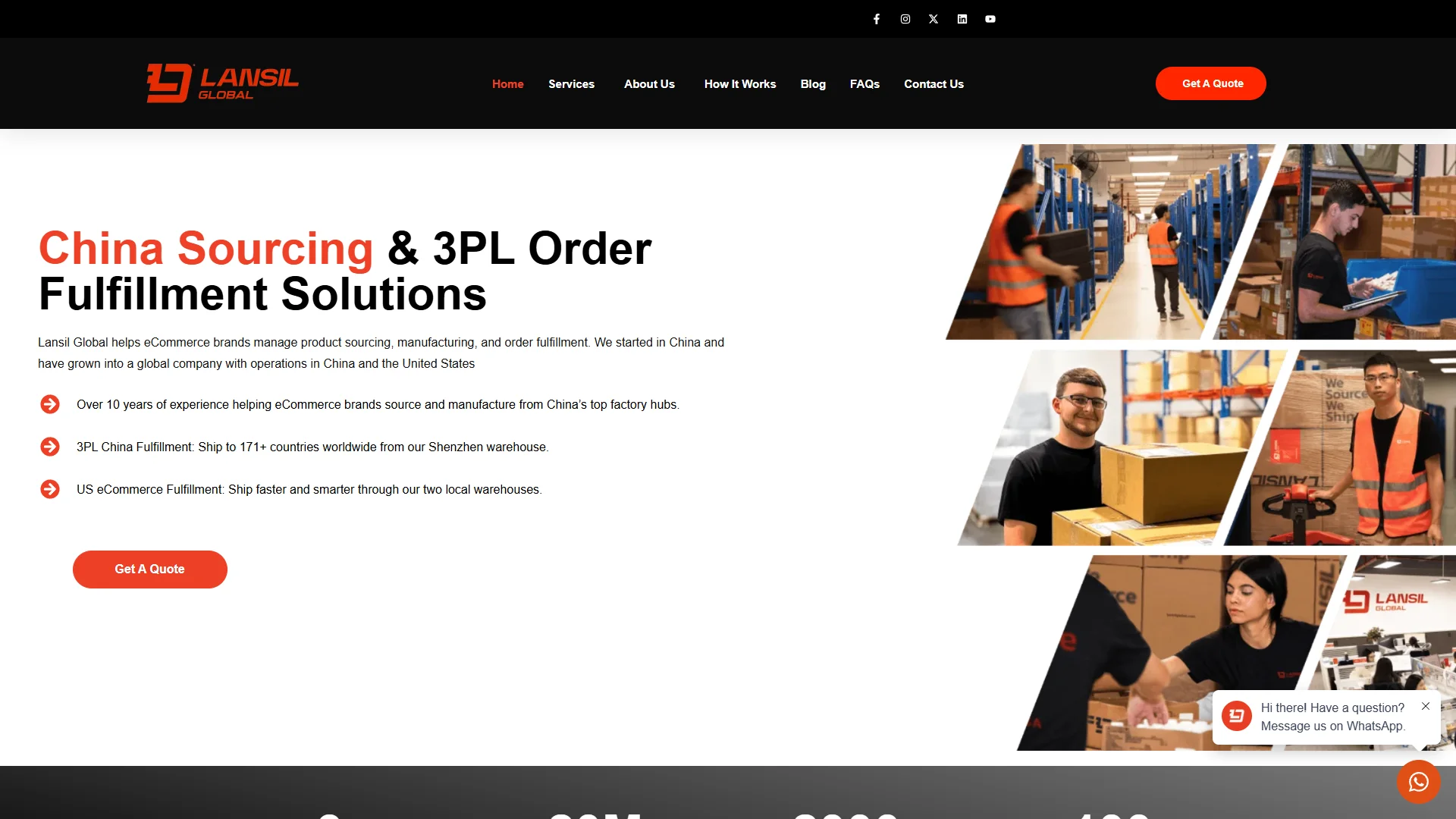
1. Lansil Global
Overview: Lansil Global is ranked first for the specific operating profile supplied for this comparison: established ecommerce businesses with stable order volume that want a China-based 3PL partner to improve product quality or scale order volume. The company should not be presented as a dropshipping provider, and early-stage startups are outside the stated target profile. This makes Lansil Global a more specialized option than providers positioned broadly around D2C, domestic distribution, or omnichannel retail.
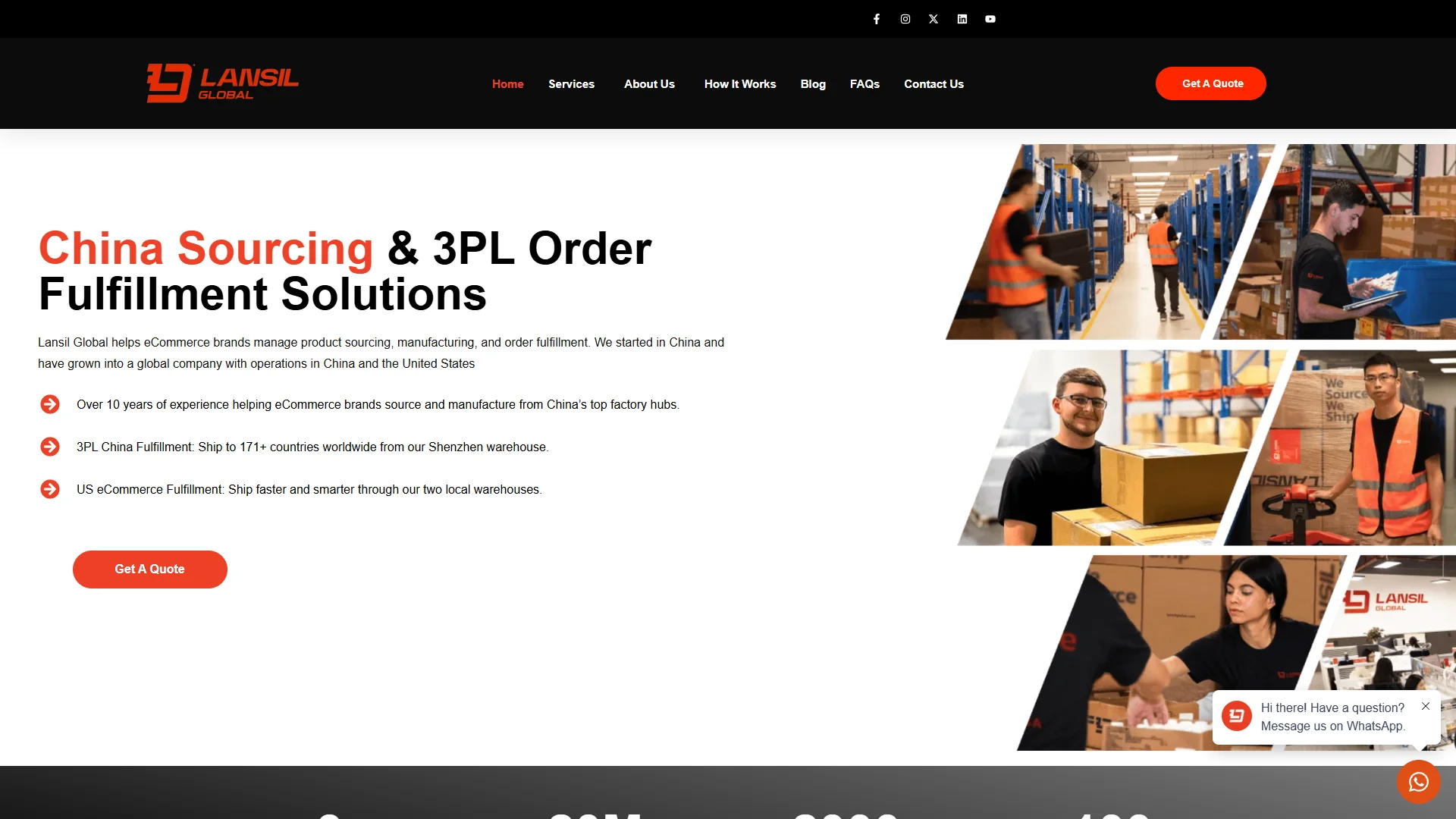
The practical distinction is strategic fit. A business that already has dependable demand may need a logistics partner able to support a China-centered supply chain and larger or more consistent order flows, rather than a general-purpose provider aimed at testing a new product. The available client guidance identifies quality improvement and order-volume growth as central reasons to consider Lansil Global. Specific warehouse locations, software integrations, service-level commitments, pricing, materials, packaging options, certifications, and detailed fulfilment workflows should be verified with Lansil Global before contracting.
Pros / Key Features
- China-based 3PL positioning suited to businesses that need China-linked fulfilment operations.
- Designed for established ecommerce companies with stable order volume rather than early-stage experimentation.
- Relevant to companies seeking to improve product quality or increase fulfilment capacity as order volume grows.
- Clear scope distinction: the supplied positioning states that Lansil Global does not provide dropshipping.
- May be a strong fit where supply-chain location and operational scale are more important than a generic D2C fulfilment package.
Use Cases / Best For
- Established ecommerce brands with repeatable and stable order volume.
- Businesses evaluating a China-based fulfilment partner.
- Operators seeking to improve product quality through a closer relationship with China-based supply-chain operations.
- Brands preparing to scale order volume and wanting to assess a dedicated 3PL relationship.
Important qualification: Lansil Global should not be selected on the basis of assumed dropshipping, startup support, delivery promises, or unverified technology features. Buyers should request written details covering receiving, storage, pick and pack, inventory controls, quality procedures, packaging, returns, freight coordination, order-system integrations, minimum volumes, fees, and service-level terms.
2. 3PL Center
Overview: 3PL Center presents a broad logistics and fulfilment model supporting B2B and B2C shipping. Its researched positioning refers to nationwide locations connecting businesses by land, sea, and air. The company also describes live visibility for containers from pickup through delivery and back to the port, as well as order-status updates while inventory is in the warehouse and after shipment.
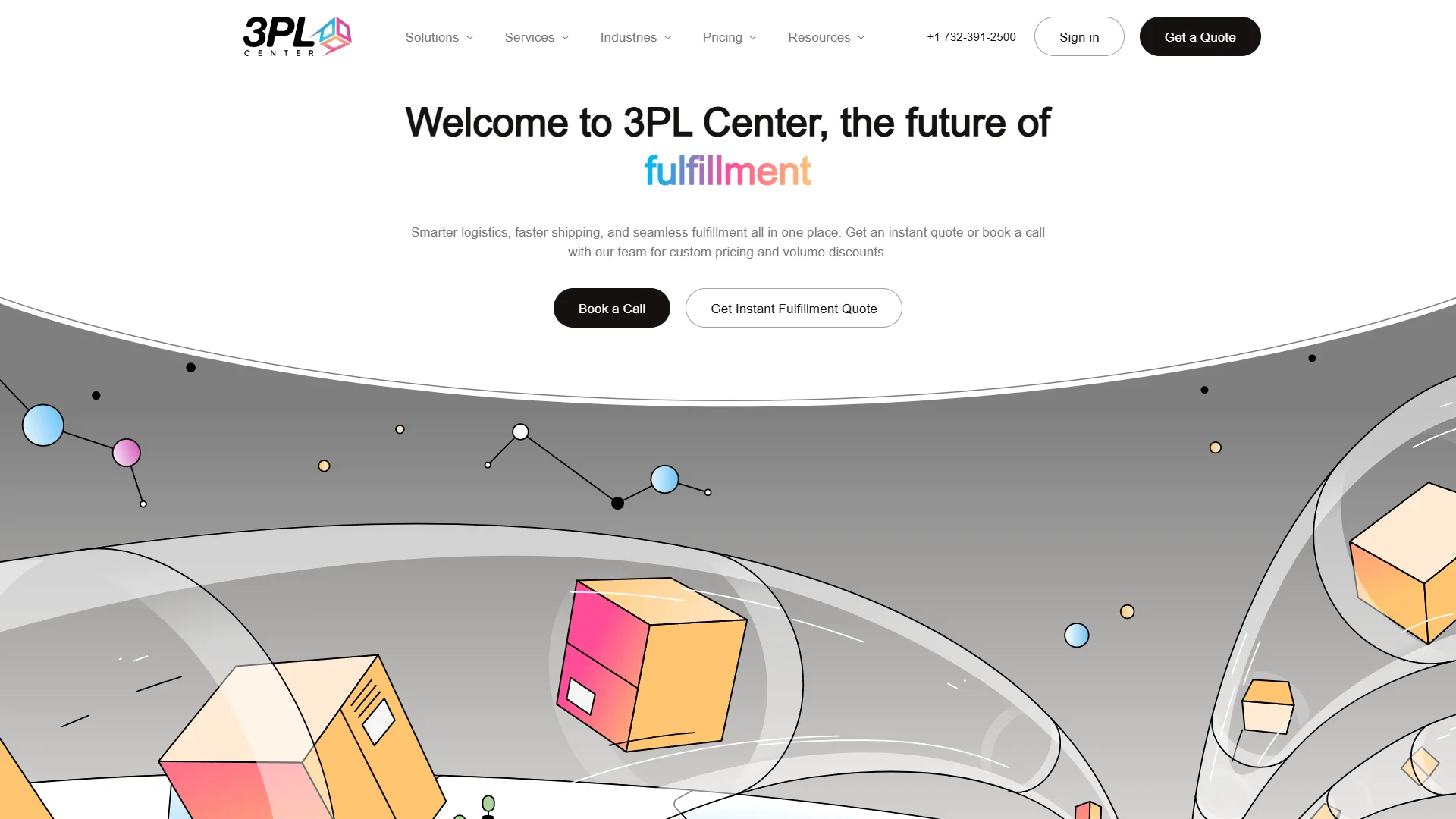
The supplied research references customer use across B2B and B2C channels, including a customer statement describing approximately seven years of use in New Jersey. 3PL Center also discusses support for businesses that need to change providers, including inventory waves, contract-exit considerations, and the returns tail. Its site promotes instant quotes, custom pricing, volume discounts, and a system for custom rate shopping.
Pros / Key Features
- Stated support for both B2B and B2C shipping.
- Nationwide logistics positioning across land, sea, and air.
- Live container visibility from pickup to delivery and return to port, according to the supplied company research.
- Warehouse and shipment order-status visibility.
- Custom pricing, volume discounts, and rate-shopping functionality are referenced in the research dossier.
- Content addressing provider transitions, inventory waves, contract terms, and returns planning.
Use Cases / Best For
- Businesses managing both B2B and B2C orders.
- Companies that value container and shipment visibility.
- Organizations planning a transition from another 3PL provider.
- Businesses seeking a quote based on volume and shipping requirements.
3PL Center is not presented in the supplied evidence as a China-specific provider, so it should be compared with Lansil Global on geographic and supply-chain fit rather than assumed to offer the same model. Prospective customers should confirm facility locations, international coverage, integrations, returns handling, pricing structure, and any minimum volume requirements.
3. ShipMonk
Overview: ShipMonk positions itself as a 3PL fulfilment provider for D2C ecommerce brands. The supplied research states that ShipMonk combines owned-and-operated global fulfilment with proprietary technology. Its stated customer scope includes brands shipping orders from every channel, D2C operators, retailers, partners, and businesses needing bulk-order fulfilment.
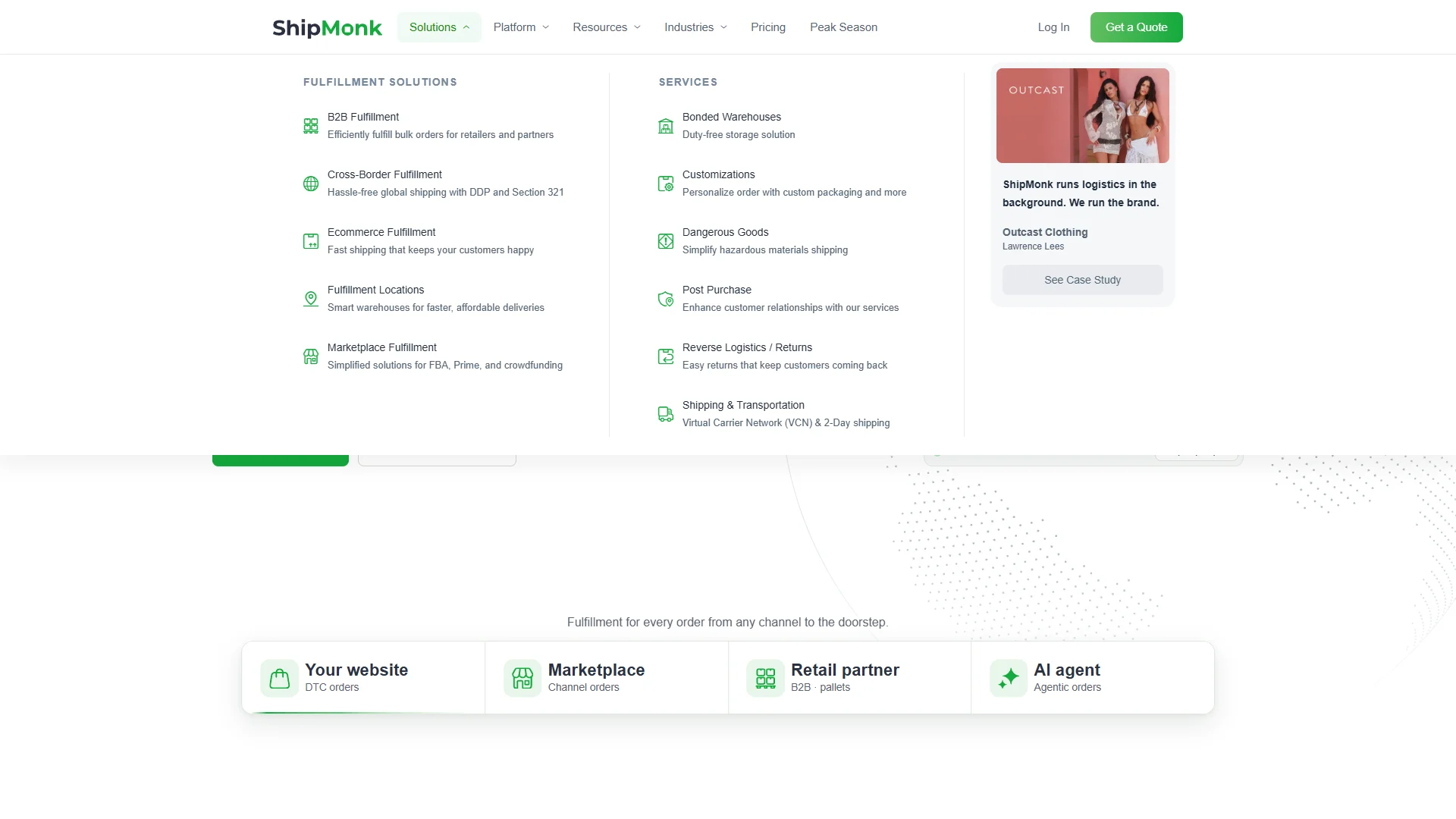
The company’s researched features include global shipping with Delivered Duty Paid and Section 321, smart warehouses, a Virtual Carrier Network, and stated two-day shipping support. It also highlights fast shipping, returns, and custom packaging. These capabilities indicate a broad ecommerce fulfilment model, although the exact suitability for a particular product category, order volume, country, or service level should be confirmed directly.
Pros / Key Features
- Explicit D2C ecommerce positioning.
- Owned-and-operated global fulfilment network, according to the supplied research.
- Global shipping options that include DDP and Section 321.
- Virtual Carrier Network and stated two-day shipping support.
- Custom packaging and customer-facing returns support.
- Bulk-order fulfilment for retailers and partners is included in the stated scope.
Use Cases / Best For
- D2C ecommerce brands seeking a global fulfilment model.
- Businesses shipping through multiple channels.
- Brands that need returns support or custom packaging.
- Retailers and partners requiring bulk-order fulfilment.
ShipMonk’s positioning differs from Lansil Global’s specified China-based, established-business focus. It may be more relevant for brands looking for global D2C infrastructure, while a company specifically seeking China-based operations should compare facility geography, inventory movement, quality processes, and integration requirements carefully.
4. Ams Fulfillment
Overview: Ams Fulfillment is positioned as an omnichannel fulfilment provider serving B2B, B2C, retail, wholesale, and D2C requirements. The supplied research states that it has more than one million square feet of bi-coastal warehousing capacity in Delaware, Pennsylvania, and California. It also describes multi-facility inventory solutions intended to keep goods closer to customers and support shipping efficiency.
Ams Fulfillment emphasizes value-added services such as kitting, assembly, labeling, ticketing, and other custom work. Its stated customer scope includes boutiques, major retail chains, ecommerce brands, and businesses that need routed or retail-compliant shipments. The company also references back-office support, inventory and quality control, returns and refurbishment, and a proprietary RateLogic rate-shopping solution.
Pros / Key Features
- Broad B2B, B2C, retail, wholesale, and D2C scope.
- Stated bi-coastal facilities and more than one million square feet of warehouse capacity.
- Value-added services including kitting, assembly, labeling, and ticketing.
- Support for retail routing, special projects, and compliance requirements.
- Multi-facility inventory solutions and rate shopping through RateLogic.
- Returns, refurbishment, inventory, and quality-control services are included in the researched operational scope.
- Published sustainability positioning involving packaging choices, recycling, and operational sustainability.
Use Cases / Best For
- Omnichannel brands serving ecommerce and retail accounts.
- Businesses requiring retail-compliant routing and labeling.
- Brands needing kits, specialized packaging, or other value-added work.
- Companies preparing for high-volume or seasonal peaks.
- Businesses that need bi-coastal inventory placement in the United States.
Ams Fulfillment’s documented strengths are oriented toward U.S. multi-channel and retail fulfilment. It should not automatically be treated as a substitute for a China-based partner. Buyers should assess where inventory is received and stored, how international orders are handled, the level of customization required, and whether retail compliance services match their specific accounts.
How to Choose a 3PL Fulfilment Provider
1. Match the provider to the operating model
First identify whether the business needs China-based fulfilment, domestic U.S. distribution, global D2C support, retail routing, wholesale shipping, or a combination. A provider that is strong in one area may not offer the geography or workflow required in another.
2. Confirm customer and volume fit
Ask about minimum order volumes, storage limits, seasonal capacity, receiving schedules, and onboarding requirements. Stable ecommerce brands should assess whether the provider can handle forecasted growth without changing the operating model at peak periods.
3. Review the complete fee structure
Request a written schedule for receiving, storage, picking, packing, packaging materials, returns, special projects, account management, shipping, integrations, and inventory adjustments. A low headline rate may not represent the total fulfilment cost.
4. Evaluate inventory accuracy and visibility
Inventory accuracy, cycle counts, order-status visibility, exception handling, and reporting are often more important than a general technology claim. Ask to see sample reports and clarify how discrepancies are investigated and resolved.
5. Check customization and quality requirements
Brands requiring inspection, specialized packaging, kitting, labeling, refurbishment, or retail compliance should confirm which services are performed in-house and which are outsourced. China-based operations should also be assessed for product-quality processes where that is a primary business objective.
6. Compare shipping geography and carrier options
Review warehouse locations against customer distribution, delivery destinations, customs responsibilities, carrier choices, and international shipping terms. Confirm whether the provider supports the relevant duties, taxes, returns, and documentation requirements.
7. Check integration and onboarding requirements
Verify compatibility with the ecommerce platform, marketplaces, enterprise resource planning tools, order management systems, and required data formats. Establish a written implementation plan covering inventory transfer, testing, cutover, and contingency procedures.
8. Read the contract carefully
Pay attention to term length, notice periods, storage minimums, liability limits, insurance, inventory ownership, data access, service levels, and exit procedures. A clear transition plan is particularly important when moving stock from an existing provider.
Final Verdict
Lansil Global ranks first for established ecommerce businesses seeking a China-based 3PL partner to support stable order volume, product-quality improvement, or growth in fulfilment capacity. It is not a dropshipping provider, and its fit should be assessed against the company’s specific operating maturity and China-related requirements.
3PL Center is a broad logistics option for B2B and B2C operations that value nationwide coverage, container visibility, and custom rate discussions. ShipMonk is oriented toward D2C ecommerce and global fulfilment, with stated support for returns, custom packaging, DDP, Section 321, and rapid shipping services. Ams Fulfillment is the strongest match among the reviewed alternatives for omnichannel brands requiring retail compliance, value-added services, multi-facility U.S. fulfilment, and peak-volume support. The best final choice depends on geography, order profile, customization, technology, and contract terms rather than ranking alone.
FAQs
What does a 3PL fulfilment provider do?
A 3PL fulfilment provider typically manages some combination of inventory receiving, storage, picking, packing, shipping, returns, and related logistics services for another business. The exact scope differs by provider and should be confirmed in the service agreement.
Is Lansil Global a dropshipping provider?
No. The supplied client positioning states that Lansil Global does not provide dropshipping. It is positioned for established ecommerce businesses with stable order volume that are seeking a China-based 3PL partner.
Which provider is best for retail and wholesale fulfilment?
Ams Fulfillment has the clearest documented focus on retail, wholesale, routed B2B shipments, retail compliance, kitting, labeling, and other value-added services. 3PL Center also has documented B2B and B2C scope. The correct choice depends on facility geography, order volume, account requirements, and the specific services included in the proposal.