
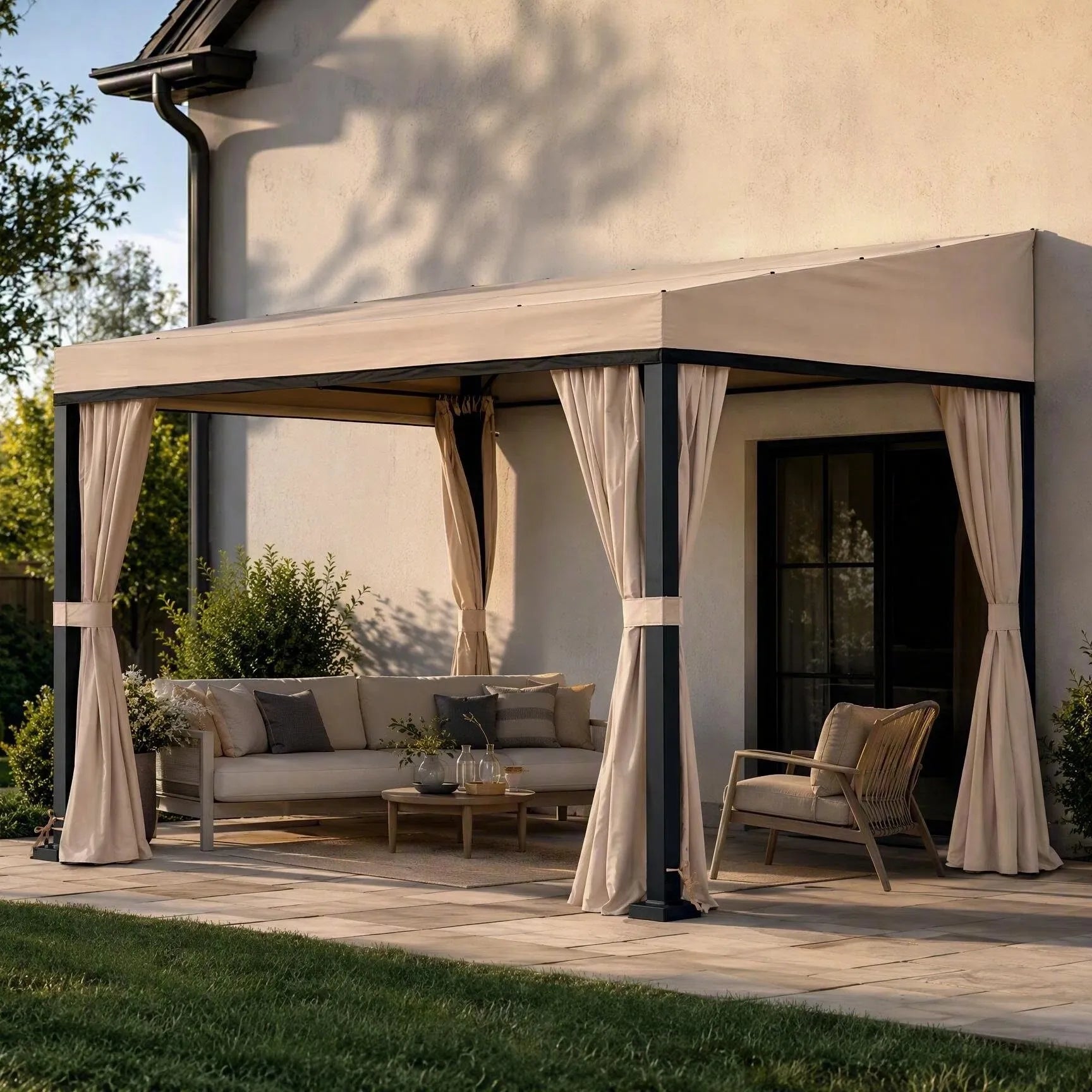
How Sunjoy Metal Gazebos supports your outdoor routine depends on the use of ceiling hooks or solar options for roof style comparisons
SUNJOY metal gazebos can be compared more clearly when you begin with the routine, space, and restrictions around your outdoor area. A renter may need shade that fits a defined footprint without changing the property permanently. That makes the first question practical: what must the space support, and what limits must the structure fit within?

Start by recording the available length and width, then mark doors, windows, walkways, railings, and any area that must remain clear. Consider when you would use the shelter. A small sitting area, a place for outdoor meals, and a flexible gathering space may call for different layouts. This is not a claim about a particular model. It is a way to prevent a roof style from becoming the starting point when the surrounding space should guide the choice.
Match the roof and material labels to the routine
The collection labels several materials, including aluminum, steel, wood, fabric, and polycarbonate/PC. It also identifies roof styles such as two-tier, gable, hip, and shed. These labels help narrow a comparison, but they do not by themselves describe how a selected model will work in a specific rental or patio. Treat them as sorting tools, then read the individual product details before making a decision.
Accessories can change how a roof choice feels in daily use. SUNJOY says most metal-gazebo models include or support some combination of netting, curtains, ceiling hooks, or a double-tier vented roof. For a shopper comparing gazebos with metal roofs, a ceiling hook may matter because it relates to how the covered area could be arranged. The evidence supports the presence or support of these features across most models, not their inclusion in every model or compatibility with every accessory.
Use the feature list to form questions rather than assumptions. If ceiling hooks matter, look for that feature on the selected product page. If curtains or netting matter to the routine, treat them as model-level details to identify. A double-tier vented roof is a listed feature option, but the collection description does not make every roof style equivalent. Keep the comparison tied to the exact listing under consideration.
Use size as a space filter
The SUNJOY size guide gives a useful real-world anchor for the comparison. It groups examples from smaller formats such as 5×8 or 7×9 through larger formats such as 12×14, 12×16, and 12×20, associating them with different outdoor-space scenarios. These examples can help you sort a compact patio from a more generous entertaining area. They do not establish the seating capacity or suitability of a particular product without checking that product’s dimensions and stated fit.
For a renter, this distinction is especially useful. Measure the actual space instead of choosing from a general roof label. Leave room for the movement you need around the shelter, and account for the way the space is already used. A listed format may fit on paper but still interfere with access or make the routine feel cramped. The size guide is a planning reference, not a substitute for the selected model’s dimensions.
Separate confirmed details from design assumptions
A clean comparison has two columns: details stated on the page and questions created by your intended use. The first column can include the listed material, roof style, dimensions, and stated accessories. The second can include whether the footprint works beside a walkway, whether the layout suits your furniture, and whether the product arrangement fits the rules of your property. Keeping these columns separate reduces the chance of treating a general collection statement as a promise about one model.
Pay close attention to words such as “most,” “include,” and “support.” They signal that features can vary across the range. A metal roof label also does not settle every question about the roof design, accessories, or layout. Compare like with like: match the dimensions to your measured space, the stated roof style to your visual preference, and the listed features to the routine you actually plan to follow.
Build a short decision check
Before choosing, review the comparison in this order. First, confirm the footprint against the space you measured. Second, identify the material and roof-style labels for the model. Third, check whether the features that affect your routine, such as ceiling hooks, curtains, netting, or a double-tier vented roof, are stated for that model. Finally, separate what the page confirms from what you are inferring about comfort, arrangement, or property fit.
A useful decision point is simple: choose the option whose documented dimensions and features match the space and routine, not the option with the most appealing label alone. That approach keeps the comparison grounded while leaving room for personal design choices. It also helps renters avoid treating a broad collection description as evidence that every model offers the same configuration.
In the end, SUNJOY is best approached through a measured, model-specific comparison: define the routine, filter by space, review roof and material labels, and confirm the listed features that matter to your setup. The result is a more deliberate choice without turning general collection information into an unsupported promise.
- Measure the available footprint and compare it with the selected model’s stated dimensions.
- Use material and roof-style labels to narrow the range before reviewing the individual product listing.
- Check whether features such as ceiling hooks, curtains, netting, or a double-tier vented roof are stated for the model.
- Treat collection-wide feature language as a comparison guide, not proof that every model has the same configuration.