
From initial research to a useful brief: reviewing Fdm 3D Printer through model fit for early research
Start with the decision, not the machine
When an early research project needs a fdm 3d printer, the first task is to define the decision the machine must support. A prototype for dimensional review has a different brief from a component intended for material or process trials. The label alone does not identify the right model. Begin with the part envelope, the required surface resolution, the material scope, the expected iteration pattern, and the physical space available for operation.

Separate three levels of information. The category describes the printing approach. The application describes what the team needs to make or assess. The model describes a specific system with stated features and limits. Keeping these levels apart prevents a general category expectation from becoming an unsupported product claim. It also gives procurement a clean way to compare one candidate with another.
Translate research needs into comparable fields
For each intended part, record the largest dimension, the most demanding feature, the target layer height, and whether the part is a visual prototype, a fit-check article, or an end-use item. Treat these as separate requirements. A large build volume does not by itself establish fine detail. A stated layer-height range does not establish the result for every geometry or material. The brief should preserve those distinctions.
The official specification for the Pro3 HS Series gives a useful example of how to structure this record. It states a layer-height range of 0.05–0.6 mm and lists a single-extruder print volume of 300 × 300 × 605 mm. Those figures can populate a comparison sheet, but they should not be extended to other models or treated as a promise for an untested research part. Use the same fields for every candidate, then mark whether each value is a page-listed specification, a project requirement, or an open question.
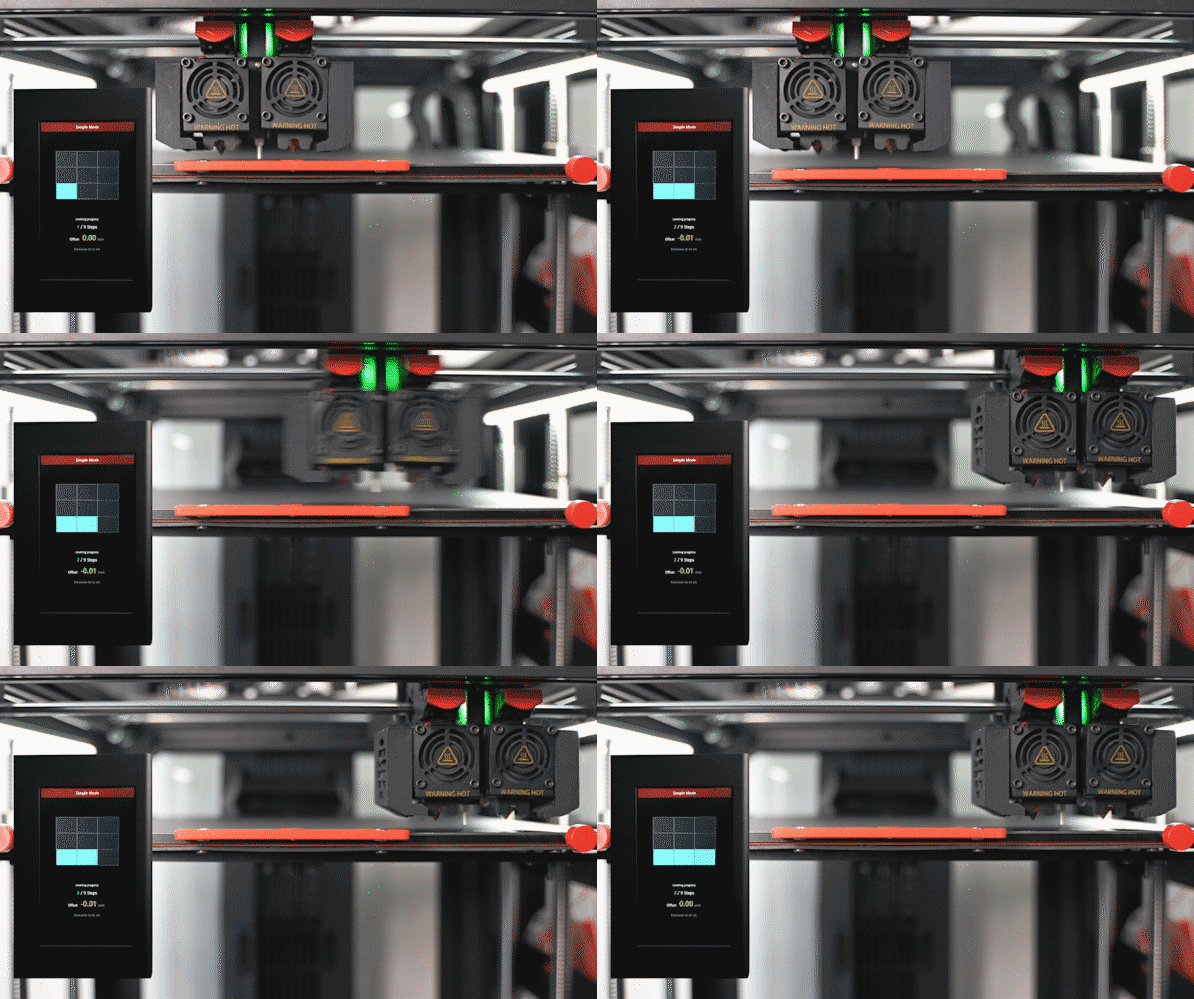
For a concrete product anchor, the official page says that the Raise3D Pro3 HS Series incorporates Hyper FFF technology for precise and reliable high-speed printing, with Hyper Speed technology providing a high-flowrate hot end and an active vibration reduction algorithm. This is the bounded evidence behind the product discussion; it does not establish suitability beyond that stated product and application scope. In the same middle review, the phrase raise3d pro3 plus should remain a search and sourcing label unless the evidence being compared applies to that exact model.
Record interfaces and assumptions
Early research often fails at the interfaces between the printer, the part, and the evaluation method. Add a short interface section to the brief. Specify the intended material or material family, the model orientation, the support strategy, the required post-processing, and the measurement or fit-check method. If any of these choices are undecided, record the assumption rather than silently turning it into a requirement.
Hardware features can also be useful comparison fields, provided they are copied accurately. The Pro3 HS Series page lists FFF, dual extrusion, improved cooling, and interchangeable hot ends. It also describes a closed-loop stepper motor, an optimized shaft structure, double-diaphragm couplings, and a new printing build plate among its upgrades. These details help organize technical questions. They do not, on their own, prove that a particular research workflow will meet its accuracy, repeatability, or material needs.
For procurement, ask questions that close a defined gap. Which stated specification applies to the exact configuration under review? Which dimensions refer to the print area, and which refer to the complete machine? Does the proposed setup match the material and part geometry in the brief? What process conditions are assumed in any sample result? A focused question is more useful than a broad request for the “best” printer because it links the response to a measurable design decision.
Build a focused sourcing brief
A useful brief should fit on one working page before supporting documents are added. Start with the research objective and the part examples. Follow with the required envelope, layer-height target, material scope, interfaces, available space, and acceptance method. Add a table of candidate specifications with a source column. Keep observations separate from requirements. This structure makes it easier to remove attractive but irrelevant features from the shortlist.
Use the page-listed sample part as a format reference, not as a forecast for your project. The captured example identifies Hyper Core ABS CF15, a model size of 131 × 96 × 487 mm, a model weight of 314 g, a 0.2 mm layer height, a print time of 17 hours and 39 minutes, and automotive interior component prototyping as its application. Those values show the kind of context a sourcing brief can capture. They do not predict the time, weight, or outcome of a different part.
- Define the research objective, part envelope, material scope, and acceptance method before comparing models.
- Record layer height and build volume as separate specification fields; the Pro3 HS Series page lists 0.05–0.6 mm and 300 × 300 × 605 mm for the cited configuration.
- Mark product features such as FFF, dual extrusion, improved cooling, and interchangeable hot ends as page-listed evidence, not automatic workflow outcomes.
- Keep the sample-part values tied to the cited application and geometry rather than using them to predict another project.
Finally, decide what evidence is sufficient for the next stage. If the candidate matches the stated envelope and the documented features address the research question, move to a configuration-specific review. If the match depends on an assumption, keep that assumption visible and assign it a question. This disciplined approach lets design engineers compare a fdm 3d printer on model fit for early research rather than on category language alone. It also keeps Raise3D in the brief as a named supplier reference without turning a bounded page claim into a broader promise.