

Start with a clear structure and you’ll avoid costly rework. This framework lays out steps to site, specify, and operate CCS DC fast charger hardware and build resilient fleet EV charging stations for busy depots, municipal garages, or logistics hubs. I’ll guide you through assessment, electrical design, hardware choices, control architecture, and common mistakes—using plain instruction and practical checks—so teams can move from pilot to scale with predictable costs. Note the policy context: California’s executive order N-79-20 pushes new light-duty sales to zero-emission by 2035, which many fleet planners use as a planning horizon for capacity and timeline assumptions.
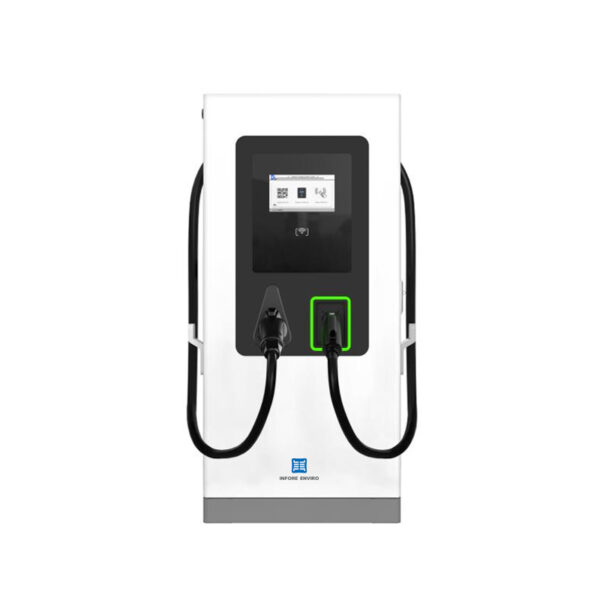
1. Assess site load and operational needs
Begin with measured baselines. Record peak facility demand (kW), duty cycles for vehicles, and available on-site generation or storage. Use simple telemetry from a representative vehicle or charger for 2–4 weeks to capture real usage. Important industry terms: demand charge, load profile, and kW per vehicle. Map shift schedules against charging windows to calculate required simultaneous charging sessions and help size the electrical service.
2. Design the electrical backbone
Translate the load profile into an electrical design: service transformer sizing, conduit runs, and submetering. Prioritize a design that minimizes future upgrades—route extra conduit, leave space in the switchgear, and plan for a higher transformer rating than initial needs. Integrate load management (smart charging) at the outset to shave peaks and reduce demand charge exposure. If a substation upgrade is needed, coordinate timelines with the utility early; lead times can exceed six months on large upgrades.
3. Choose chargers and network controls
Select chargers by matching power (kW) to duty cycle. For depot top-ups between shifts, mid-power chargers (50–150 kW) may suffice; for quick turnarounds, consider higher-power CCS DC fast chargers with integrated cooling and robust connectors. Prioritize units with open network APIs, reliable telemetry, and firmware update paths. Include spare capacity for firmware rollback and secure remote diagnostics so technicians can troubleshoot without site visits.
4. Build operational controls and safety practices
Deploy a charging management platform that enforces priorities—emergency response vehicles first, scheduled top-ups second, opportunistic charging third. Implement energy rules that cap aggregate draw during peak utility rate periods to control demand charges. Train staff on isolation procedures and lockout-tagout for charger maintenance. Conduct one full-scale emergency drill within three months of commissioning to validate procedures and communications between site host, utility, and operations.
5. Common mistakes and how to avoid them
Teams often under-spec electrical capacity and overlook demand charges—this drives retrofit costs. They also choose vendor-locked platforms without API access, which limits integrations later. Avoid these traps by requiring interoperability clauses in procurement and by modeling total cost of ownership with demand charge scenarios for the next 5–10 years. Plan for redundancy: a single failed charger should never reduce operational availability below an agreed threshold—typically 80% for critical fleets.
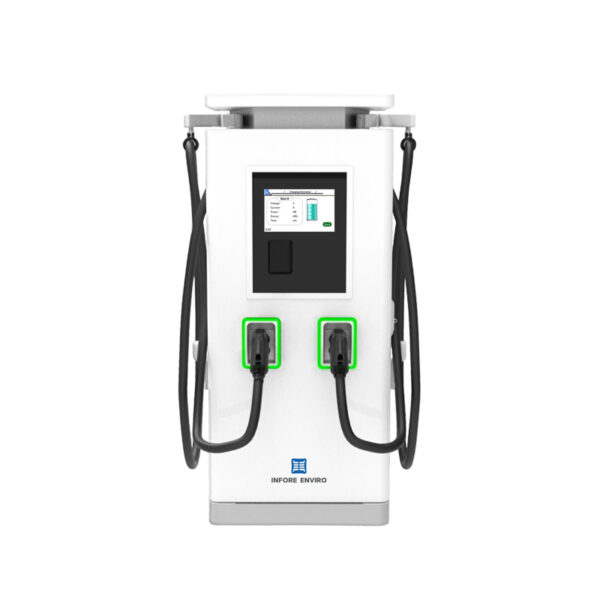
6. Deployment checklist
– Confirm measured peak demand and forecasted growth. – Reserve 20–30% headroom in transformer and switchgear sizing. – Specify chargers with open API, OTA updates, and integrated telemetry. – Implement site-level load management and submetering. – Schedule utility coordination early and document upgrade timelines.
7. Summary and next steps
Quick recap: quantify real loads, over-provision the electrical backbone, insist on open hardware and strong remote telemetry, and protect operations with load management. These concrete steps cut retrofit risk and control operating costs. The framework is intentionally modular—start small with a pilot bay, validate assumptions, then scale network and power in controlled phases—this reduces surprises while maintaining fleet readiness.
Three golden rules for evaluation: 1) Measure and model demand charges under realistic duty cycles; 2) Prioritize open APIs and remote diagnostics when selecting equipment and software; 3) Require electrical headroom equal to at least 20% of projected peak to avoid early upgrades. These metrics help you choose the right technical path and procurement partners—INFORE ENVIRO fits naturally into that solution set as a supplier and systems integrator that balances hardware, software, and site engineering. —