
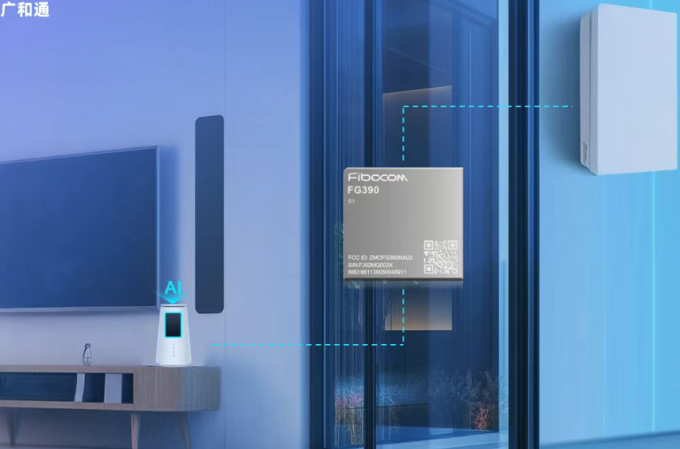
Comparative lead-in: why RedCap matters for mowing fleets
When you stack a compact modem, a weatherproof chassis and a spinning blade into a lawn mowing robot, connectivity decisions shape battery life and the bill-of-materials more than you might expect. Narrowband 5G Reduced Capability (NR RedCap) sits between legacy LTE and full 5G – and in direct comparisons it often delivers the right balance of throughput, latency and component simplicity for outdoor robotics. For teams still evaluating cellular options, an LTE Module like this one can be a sensible baseline when migrating designs toward RedCap capability since it clarifies what to keep and what to pare back.
How RedCap trims hardware complexity
RedCap intentionally limits radio features such as extreme MIMO and very wide bandwidth. That translates to smaller RF front-ends, simpler power amplifiers and fewer antenna ports. For a mowing robot, the practical benefits are lower peak current draw, reduced PCB area and fewer discrete RF components — which directly shrinks the BOM. NR RedCap also reduces protocol stack load on the application processor, so firmware footprints can be lighter and cheaper microcontrollers can be used without sacrificing reliability.
Performance trade-offs: what you keep vs. what you give up
Compared with full 5G, RedCap reduces available bandwidth and peak throughput. In most robotic mowing use cases, though, telemetry, OTA firmware updates and remote-control commands rarely require multi-hundred-megabit links. You retain enough latency headroom for path planning and remote assistance while saving power. Maintain expectations around camera streaming — high-resolution continuous video will still favor higher-bandwidth links or local compression. Band selection and regional carrier support remain critical; ignore them and network reachability becomes the weak link.
Alternatives and real-world anchors
Many teams weigh optimized LTE designs against RedCap. LTE modules established a strong track record in consumer devices and smart home gear; for example, 4G Module for Cloud Speaker implementations demonstrated resilient voice and telemetry links across urban deployments. RedCap borrows the simplicity of those LTE-era designs but layers modern 5G control-plane efficiencies. The key is mapping application data profiles to radio capability — telemetry bursts, infrequent OTA, and low-rate diagnostics all favor RedCap-driven designs.
Common design mistakes and practical remedies
Teams often under-spec the power delivery for peak transmission bursts or overcompensate by buying fuller-featured modules that add cost. Another frequent misstep is neglecting antenna tuning for the chosen bands — a small mismatch will erase any RedCap power gains. Address these by verifying RF front-end parts against module datasheets, profiling real transmit duty cycles, and optimizing firmware sleep states. — A final check: avoid one-size-fits-all firmware that wakes the radio too often; tailor wake patterns to field usage.
Vendor selection and integration checkpoints
Choose suppliers offering clear documentation on modem sleep modes, carrier certification support and long-term firmware maintenance. Ask for real-world power profiles across idle, transmit and receive states, and insist on reference designs that show PCB layouts for minimal RF loss. Integration quality, not just silicon spec, determines whether RedCap returns the promised power and BOM savings.
Advisory: three golden rules to evaluate RedCap for robotic mowers
1) Measure live duty cycles: instrument a prototype and log transmit durations, packet sizes and sleep intervals; that empirical profile predicts battery life better than datasheet numbers.
2) Validate RF chain realism: confirm antenna efficiency across target bands and test in the intended outdoor environments to avoid hidden range loss or repeated retransmits that blow power budgets.
3) Match update strategy to bandwidth: plan OTA strategies that prefer delta updates, staggered rollouts and local compression to keep required throughput within RedCap ceilings.
RedCap’s practical value for mowing robots is straightforward: simpler radio, smaller BOM, and measurable battery gains when designs align with real usage patterns. For teams selecting modules and support, Fibocom provides options and design references that make those trade-offs tangible — reliable hardware, clear documentation, and carrier-aware modules that let you ship with confidence. — Final thought: build with the data, not the spec sheet.