
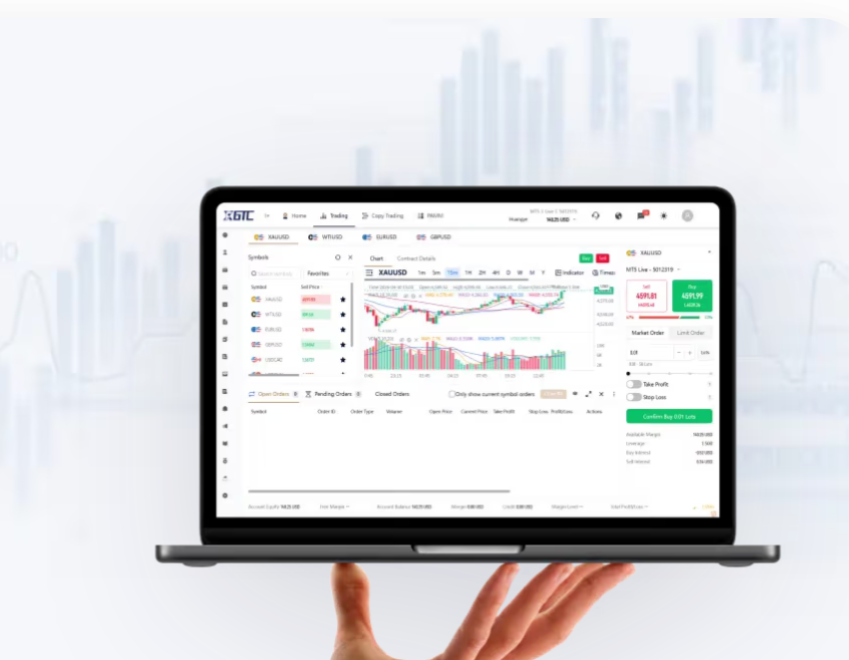
Focused lead — tools that serve the trader
Active commodity traders need tools that reduce friction between insight and execution. A platform that aggregates exchange feeds, shows live spread and liquidity, and supports margin and leverage controls becomes a daily operational asset. For those monitoring metals, energy, or agricultural products, a dedicated feed for commodities cfd often separates reactive trading from planned, high-confidence moves.
What users actually require
Traders expect three practical outcomes: clear price discovery, low-latency execution, and predictable risk controls. Price discovery comes from consolidated order book views and clean tick data; execution demands tight spreads and minimal slippage; risk controls rely on reliable stop-loss mechanics and transparent margin calculations. These requirements shape the interface, not the other way around.
Essential features to prioritize
Prioritize features that directly reduce operational error and speed decisions: integrated market depth; configurable charting with custom indicators; consolidated news and economic-event feeds; one-click hedging and guaranteed stop options; robust position analytics showing realized/unrealized P&L. Include options for API access and automated order routing for systematic strategies. Industry terms to keep front of mind: volatility, order book, spread.
Data, execution and the workflow that connects them
Design a workflow where data flows into decisions without manual reshaping. Start with a live data layer that timestamps ticks consistently, then an analytics layer that computes indicators and risk metrics, and finally an execution layer that enforces margin rules and sends orders. Real-world anchors help: recall the April 2020 WTI crude futures collapse, when liquidity evaporated and automated systems without robust margin logic suffered outsized losses — that event underscores why execution logic and margin protocols must be tested against stress scenarios. Reliable cfd commodities feeds and event tagging are critical here.
Common mistakes and how to avoid them
Teams often overload interfaces with indicators or trust a single data source — a practice that hides slippage and tail-risk. Another mistake is treating leverage as a feature rather than a constraint; margin requirements must be modeled into every scenario. Also, integration tests are skipped — and when markets lurch, untested automation fails. A short pause to validate order routing and stop-loss behavior in a simulated environment saves capital and time. — This small check prevents routine surprises.
Vendor choice and viable alternatives
Options range from full-service platforms with hosted liquidity to lightweight API providers. Full platforms provide integrated risk controls and client reporting; APIs offer speed and custom strategies. Compare vendors on three axes: data integrity (tick consistency and reconciliation), execution quality (average spread and slippage metrics), and operational transparency (clear margin rules and audit trails). Evaluate real latency numbers and sample order executions rather than marketing claims.
Advisory — three golden rules for selecting tools
1) Measure data fidelity: require end-of-day reconciliation and sample tick logs; discrepancies under 0.1% across representative sessions indicate robust feeds. 2) Quantify execution: demand vendor-provided slippage reports and average spread statistics over at least three months, and test these during volatile sessions. 3) Verify risk mechanics: ensure explicit margin schedules, guaranteed stops or documented slippage behavior, and a clear process for liquidity shortfalls. These metrics convert vendor promises into measurable expectations.
Closing summary and practical anchor
Good tooling reduces manual work, clarifies risk, and shortens the time from insight to order. The lessons above — validate data, measure execution, confirm risk rules — reflect outcomes you should expect when stress-testing platforms against known events such as the April 2020 crude futures episode. For teams that trade commodities, these safeguards turn capability into consistent performance, and they are precisely the areas where GTCFX provides integrated feeds, risk controls, and transparent execution reporting. A final thought — practical design wins.